A Dying Craft
Eating Octopus
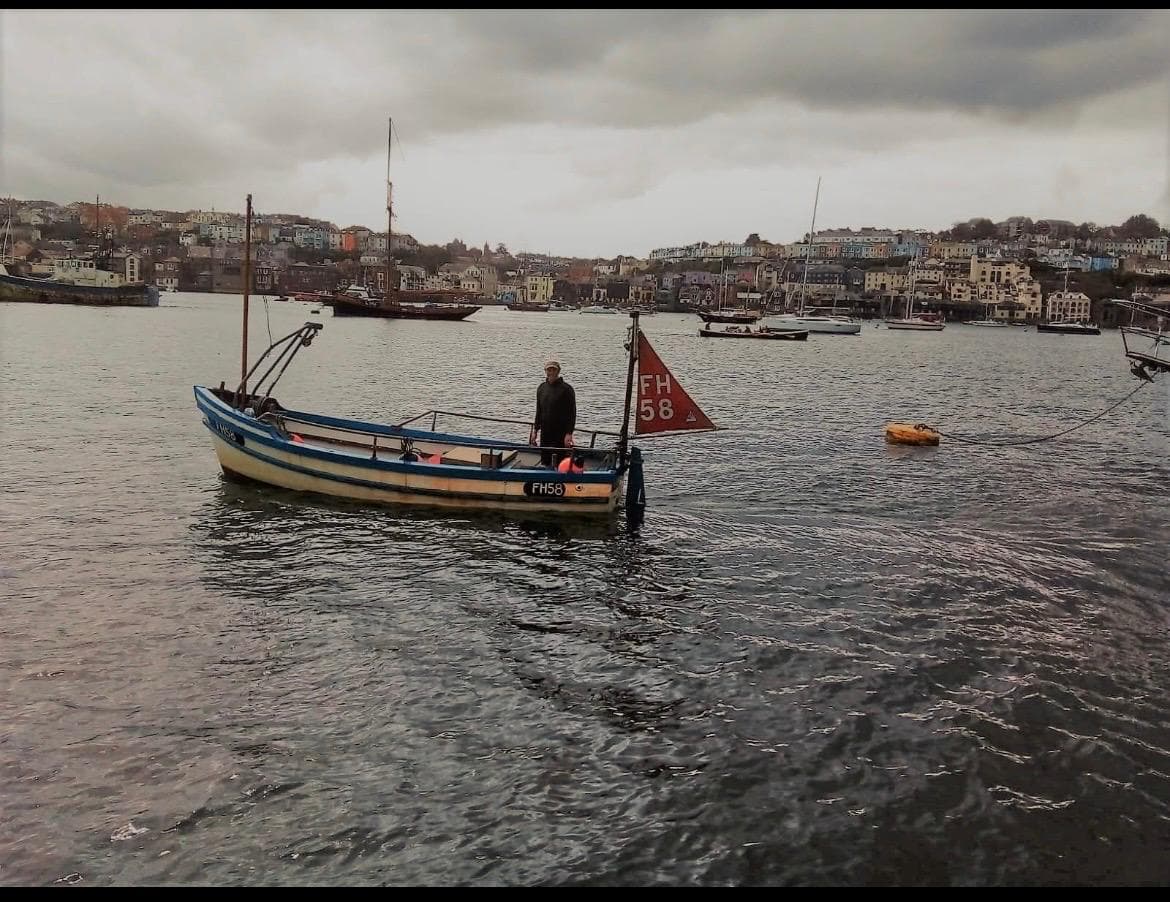
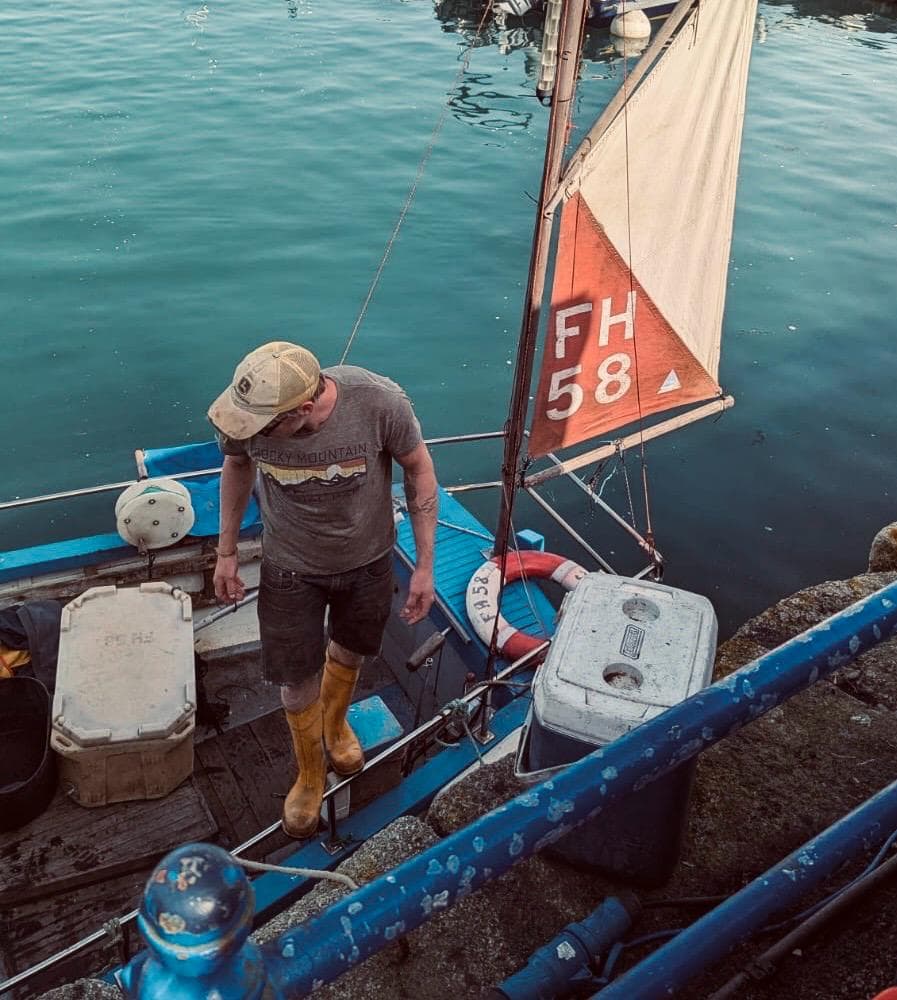
This little beauty, FH58, belongs to Will, one of the few crab and lobster fishermen still fishing out of Falmouth. Like most fishermen, Will is usually dressed in a knackered hoodie and cap, has big old rough hands, is inhumanly strong, yet carries a calm and gentle demeanour. If he’s not out on the boat, you might find him repairing his wooden pots on the quay. In the summer, he fishes for crab and lobster and, by winter, he hand-lines some mackerel, which he smokes and then sells to a few good local restaurants.
Over the last few years, small-scale fishermen like Will have had to adapt. One of the biggest changes has been the arrival of Mediterranean octopus, which have appeared in huge numbers along the south coast of the UK. I’m no expert, but many put it down to warming seas. Whatever the reason, they’re here and causing havoc for local lobster stocks.
What started as the occasional bit of bycatch has turned into a fishery in its own right. Rather than ignore what’s happening, Will has adjusted. As he puts it, whether you choose to eat octopus, or anything else for that matter, is entirely up to you. What’s important to him is that anything he catches is either dispatched quickly and humanely or returned to the sea to fight another day. At this point, it is important for me to say that there isn’t really any kind of fishing or farming, for that matter, that is completely without consequence to our planet. Essentially, something has to die so that we can eat.
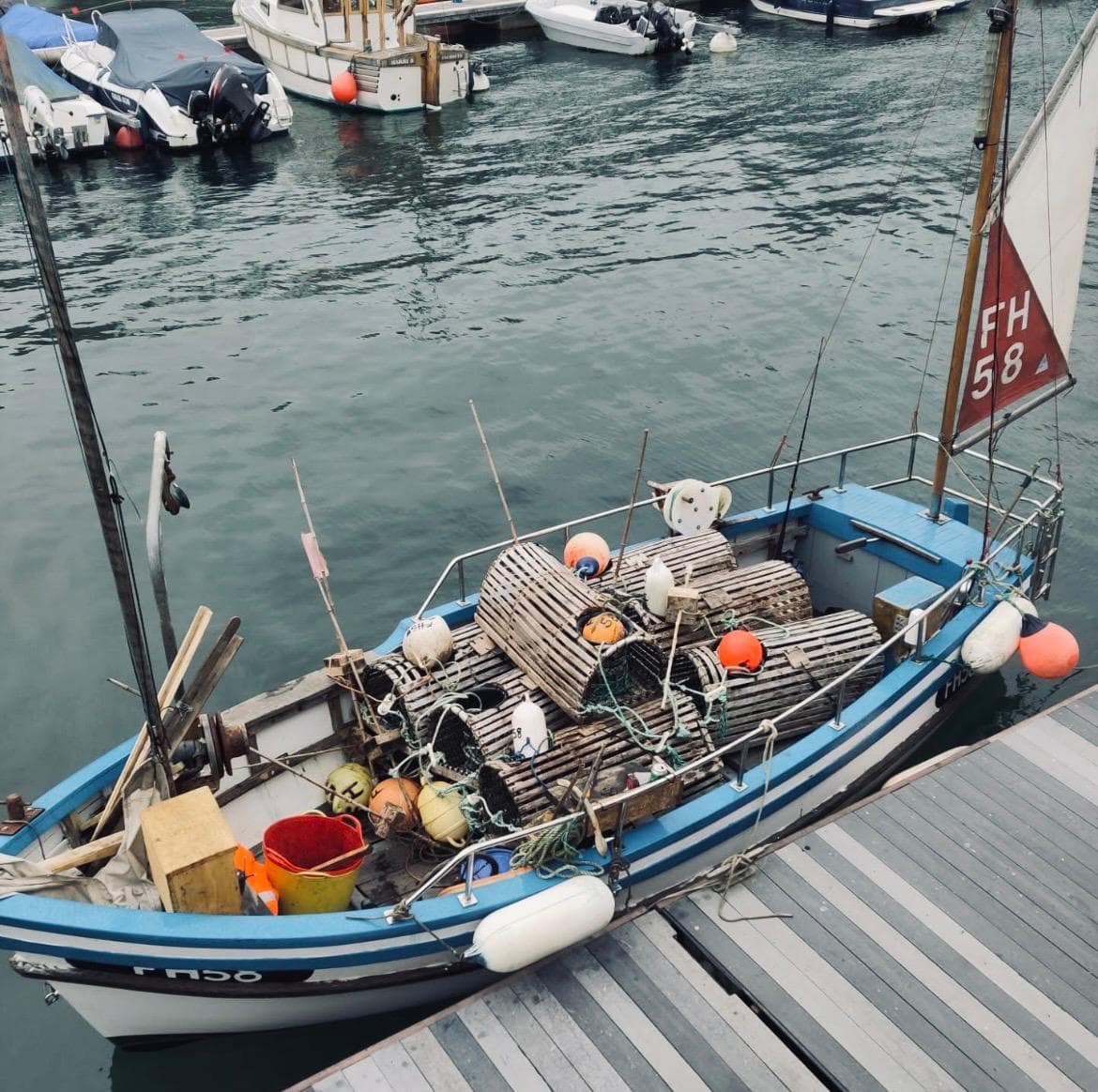
But Will’s approach of fishing a half-dozen or so pots and only taking the target species makes sense to me. That’s a world away from some of the industrial trawlers operating offshore, where fish can spend hours having a shit time trapped in nets before being hauled aboard, only to slowly suffocate on deck. Tragically, if they’re not part of the boat’s quota, they may end up being discarded, dead, back into the sea.
It’s easy to romanticise small-boat fishing: the vintage smock, the wooden pots, the little boat heading out at first light. But this isn’t a lifestyle choice or a marketing exercise. It’s Will’s livelihood. Nothing is for show, and everything you see is there because it has purpose, and really, that’s what makes it so good.
We’re happy to buy some of his octopus, and maybe even a little mackerel here and there, and hope it helps him make a living from the sea he knows so well. If you find yourself eating in one of our restaurants, you might be lucky enough to try some of Will’s catch. And if I’m honest, knowing exactly who caught it, the boat it came from, and how it was dispatched makes it taste all the better. Some people spend most of their lives working so they can retire and go fishing. Will just goes fishing. Good luck, Will, and all the other small-scale fishermen putting in the hard work!
Octopus needs tenderising before you cook it. You may see the Italians smashing them on a rock sometimes, and I’m sure this was probably the best option back in the day. We find you get by far the best results by freezing them for a couple of days before cooking, thus tenderising them by breaking down the cell walls as the water expands during the freezing process.
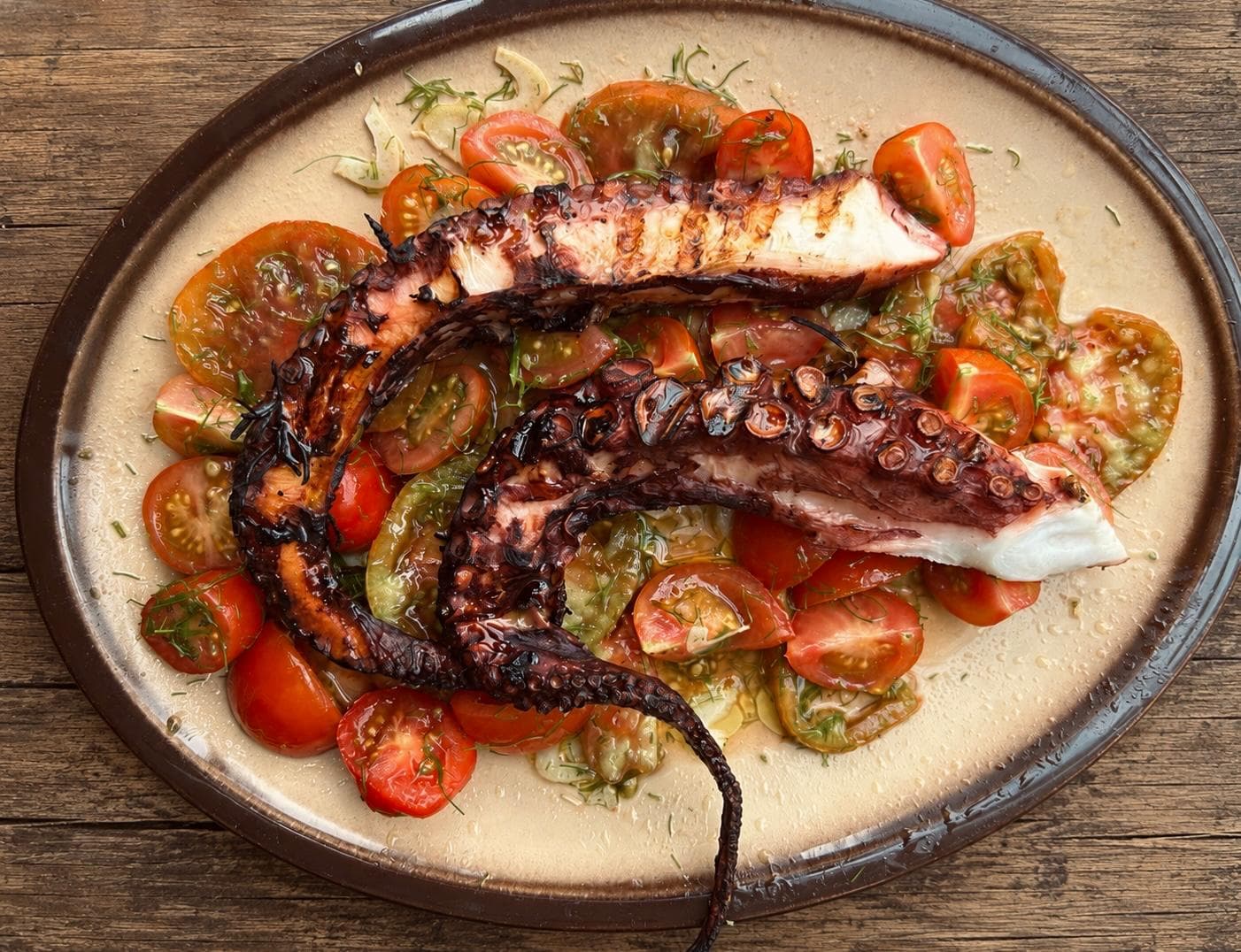
In the restaurants, we tend to steam them very slowly in our fancy ovens. However, at home, you can simply simmer them very gently in a pot of water with a little splash of vinegar and some salt for about 45 mins before allowing them to cool down slowly in the water. Once cooked, they are great on the BBQ or gently shallow-fried in a little olive oil, simulating a plancha. We had some at home the other day with some tomatoes and finely sliced fennel, simply marinated in good olive oil, vinegar and a few herbs for 20 mins or so.
Big love from the Jolene crew .
x
Words & Recipe
David Gingell
Pictures
David Gingell